
News
ESSP and the Municipality of Évora Sign EGNOS Working Agreement to Introduce First LPV Procedure
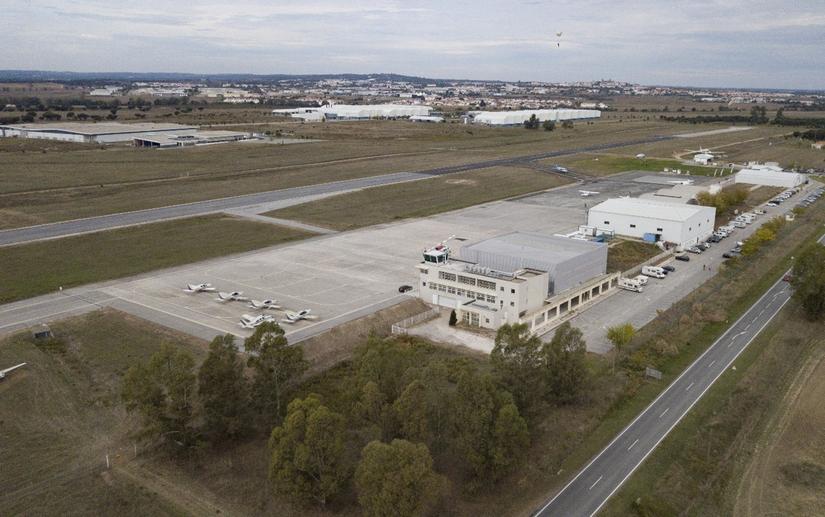
ESSP SAS is pleased to announce the signing of an EGNOS Working Agreement (EWA) with the Municipality of Évora, marking a landmark step in improving both safety and operational efficiency at Évora Municipal Airport (ICAO: LPEV), where the municipality is the responsible Air Traffic Services (ATS) provider in charge of the Aerodrome Flight Information Service (AFIS) supporting the air operations being conducted at the local aerodrome.
This new agreement supports the implementation of Évora’s first LPV procedure, which is expected to significantly enhance approach safety, especially in poor weather conditions, and to improve access for aircraft under a wider range of operational scenarios. The initiative also aligns with the municipality’s desire to modernize its navigation infrastructure according to the Performance Based Navigation Implementing Rule (PBN-IR).
According to the Municipality of Évora, the signature of the EWA reflects a strategic commitment to improving aviation safety and efficiency. While the competent authority highlighted the benefits of an EGNOS-based approach, Évora embraced the opportunity with clear motivation: to modernise its operations, boost accessibility in difficult meteorological conditions, and align with PBN-IR navigation standards.
Regarding aircraft operations, the Municipality of Évora highlights that some of the aircraft in its resident flight training organisation are already PBN-capable, and there is a clear ambition to expand in this direction. The EWA will support this evolution, enabling more aircraft to benefit from LPV procedures as navigation capabilities advance.
Crucially, this agreement also underscores the broader value of EGNOS as a European Programme. EGNOS (European Geostationary Navigation Overlay Service) is a key initiative of the European Union’s Space Programme, managed by the European Union Agency for the Space Programme (EUSPA), and owned by the European Commission. Through its Safety-of-Life (SoL) service, EGNOS enhances the accuracy, reliability and integrity of GNSS signals such as GPS (and, in future, Galileo), supporting critical aviation operations down to LPV minima.
By leveraging EGNOS, the Municipality of Évora contributes to the broader European objectives of the Single European Sky (SES), helping optimise the use of airspace, reduce reliance on ground-based navigation aids, lower costs, and increase capacity. Moreover, the European Commission’s continued commitment to EGNOS – through system evolution, lifecycle extension, and reinforcing system resilience – reflects its long-term vision for a unified, efficient and interoperable European airspace.
Évora Municipal Airport is located approximately 3.5 km south-southeast of the city. The facility features a main asphalt runway (01/19) of about 1,300 m and supports both IFR and VFR operations. Through this collaboration, ESSP reaffirms its commitment to working closely with local authorities to deploy EGNOS-based solutions that strengthen aviation safety and operational effectiveness across Europe.